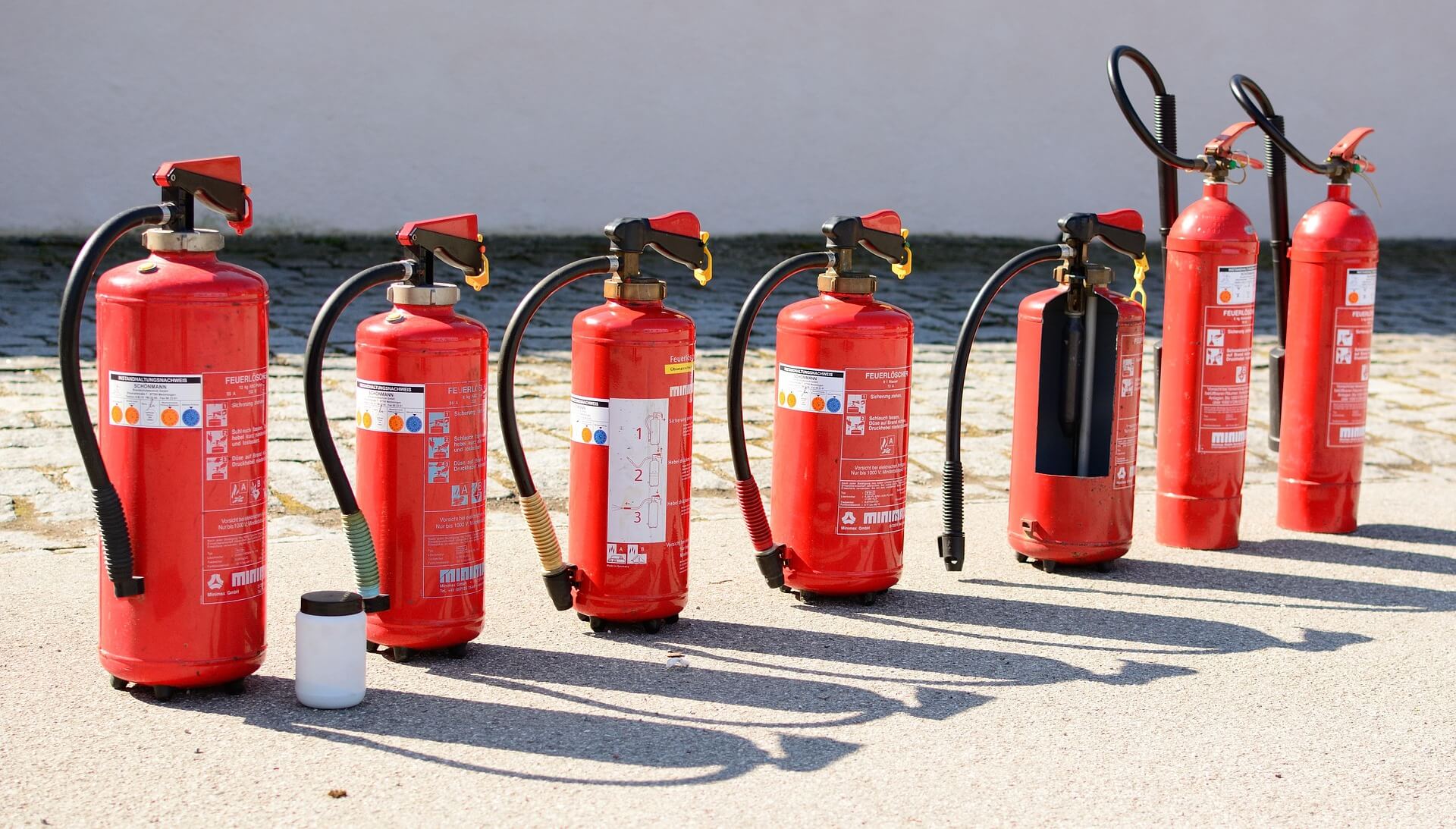
Tags: Fire Extinguisher Types and Uses · Fire Safety Equipment Suppliers Hyderabad · ABC CO2 Foam Extinguisher · Fire Classes India · Clean Agent Extinguisher
Fire extinguishers are essential safety devices that can prevent small fires from becoming major disasters. However, using the wrong type of extinguisher on a fire can be ineffective or even dangerous. Understanding the different types of fire extinguishers and their appropriate uses is crucial for effective fire safety.
Understanding Fire Classes
Before diving into extinguisher types, it's important to understand fire classifications. Fires are categorized into different classes based on the fuel source:
- Class A: Fires involving solid combustibles like wood, paper, cloth, rubber, and plastics
- Class B: Fires involving flammable liquids such as gasoline, oil, grease, and paint
- Class C: Fires involving energized electrical equipment like appliances, wiring, and circuit breakers
- Class D: Fires involving combustible metals such as magnesium, titanium, and sodium
- Class K: Fires involving cooking oils and fats in commercial kitchens
Types of Fire Extinguishers
1. ABC Dry Chemical Extinguisher
The ABC dry chemical extinguisher is the most versatile and commonly used type. It contains monoammonium phosphate, a dry chemical that effectively suppresses fires by interrupting the chemical reaction of the fire triangle.
Suitable For: Class A, B, and C fires
Best Applications: Homes, offices, vehicles, warehouses, and general-purpose use
Advantages: Multi-purpose capability, cost-effective, widely available, easy to use
Disadvantages: Leaves residue that requires cleanup, can damage sensitive electronics
2. CO2 (Carbon Dioxide) Extinguisher
CO2 extinguishers discharge carbon dioxide gas, which displaces oxygen around the fire and cools the burning material. They leave no residue, making them ideal for areas with sensitive equipment.
Suitable For: Class B and C fires
Best Applications: Server rooms, laboratories, electrical panels, computer rooms, and areas with expensive equipment
Advantages: Residue-free, non-conductive, environmentally friendly, safe for electronics
Disadvantages: Not effective on Class A fires, can cause frostbite if touched, limited range
3. Foam Extinguisher (AFFF)
Aqueous Film Forming Foam (AFFF) extinguishers create a foam blanket that seals the surface of burning liquids, preventing vapor release and re-ignition. They also have a cooling effect on solid combustibles.
Suitable For: Class A and B fires
Best Applications: Garages, workshops, fuel storage areas, industrial facilities
Advantages: Prevents re-ignition, effective on liquid fires, cooling effect, suitable for outdoor use
Disadvantages: Not suitable for electrical fires, requires cleanup, can freeze in cold temperatures
4. Water Extinguisher
Water extinguishers are the simplest and most economical type. They work by cooling the burning material below its ignition temperature. Modern water extinguishers often contain additives to improve their effectiveness.
Suitable For: Class A fires only
Best Applications: Buildings with primarily solid combustibles, textile factories, woodworking shops
Advantages: Environmentally safe, cost-effective, excellent cooling effect, easy to refill
Disadvantages: Dangerous on electrical and liquid fires, can freeze, limited application range
5. Wet Chemical Extinguisher
Wet chemical extinguishers contain a solution of potassium acetate that creates a foam blanket to suppress cooking oil fires. They also provide a cooling effect to prevent re-ignition.
Suitable For: Class K (and Class A) fires
Best Applications: Commercial kitchens, restaurants, food processing facilities
Advantages: Highly effective on cooking oil fires, prevents splashing, cooling effect
Disadvantages: Limited to specific applications, more expensive, requires special training
6. Clean Agent Extinguisher
Clean agent extinguishers use gases like Halon alternatives (FM-200, Novec 1230) that suppress fires without leaving residue. They work by interrupting the chemical reaction of fire.
Suitable For: Class B and C fires
Best Applications: Museums, archives, data centers, telecommunications facilities
Advantages: No residue, safe for sensitive equipment, environmentally acceptable alternatives available
Disadvantages: Expensive, limited availability, requires proper ventilation after use
How to Choose the Right Fire Extinguisher
Selecting the appropriate fire extinguisher depends on several factors:
- Fire Risk Assessment: Identify potential fire hazards in your environment
- Building Type: Residential, commercial, or industrial facilities have different requirements
- Equipment Present: Consider sensitive electronics, machinery, or valuable items
- Occupancy: Number of people and their ability to use extinguishers
- Local Regulations: Comply with fire safety codes and standards
- Maintenance Requirements: Consider ongoing inspection and refilling needs
Proper Placement and Maintenance
Having the right extinguisher is only part of the equation. Proper placement and maintenance are equally important:
- Mount extinguishers in easily accessible locations near exits
- Ensure visibility with proper signage
- Keep extinguishers at appropriate heights (3.5 to 5 feet from floor)
- Conduct monthly visual inspections
- Schedule annual professional maintenance
- Replace or recharge after any use
- Perform hydrostatic testing as required
Using a Fire Extinguisher: The PASS Method
Remember the PASS technique when operating any fire extinguisher:
- P - Pull: Pull the pin to break the tamper seal
- A - Aim: Aim the nozzle at the base of the fire, not the flames
- S - Squeeze: Squeeze the handle to discharge the extinguishing agent
- S - Sweep: Sweep from side to side at the base of the fire
When Not to Use a Fire Extinguisher
Fire extinguishers are designed for small, contained fires. Evacuate immediately and call emergency services if:
- The fire is spreading rapidly
- The room is filling with smoke
- The fire blocks your exit route
- You don't have the proper extinguisher type
- You're not trained in extinguisher use
- The extinguisher is empty or malfunctioning
Conclusion
Understanding fire extinguisher types and their appropriate applications is essential for effective fire safety. While ABC dry chemical extinguishers offer versatile protection for most situations, specialized environments may require specific extinguisher types. Regular maintenance, proper placement, and user training are crucial for ensuring your fire extinguishers are ready when needed.
At Tanishq Fire Safety, we provide expert guidance on selecting, installing, and maintaining the right fire extinguishers for your needs. Our certified professionals conduct thorough fire risk assessments and recommend customized solutions to keep your property and occupants safe.
Need Help Choosing Fire Extinguishers?
Contact our experts for a free consultation and fire risk assessment
Get Free Consultation